If you’ve been following me for a while, you know I’m a huge fan of real estate investing—especially in Germany. Back when we lived there, we didn’t just buy our dream home… we also went on to buy two more investment properties.
Moving to Germany or new in Germany? Check out our Resources Page for all the help you need!
If you want to know more about how I became a landlord in Germany, I’ve shared the full story before. Honestly, I loved everything about it.
Our first property was our forever home—the dream house we actually lived in. After that, we bought two more places purely as investment properties. And I have to say, the process was incredibly smooth.
We had a wonderful financial advisor who made everything easy. He helped us pick the right locations, handled the paperwork, and explained every detail. The best part? I barely had to do anything.
One of the properties is even part of a rental pool, which means even if someone moves out, the income doesn’t stop. The rent is shared among all units in the pool. So there’s no need to panic if one tenant leaves.
And here’s a fun fact: I’ve never even seen one of the properties in person. Everything—from the decision to buy to signing the papers—was done remotely. That’s how turnkey the whole thing was.
Interest Rates Were a Dream
The timing of our investments couldn’t have been better. Back then, mortgage interest rates in Germany were at historical lows—1% to 2%. That’s basically free money.
With rates that low, the monthly rent comfortably covered a large portion of our mortgage and other expenses, making the investment feel like a clear and easy choice.
If you’re interested in buying a house in Germany as a foreigner, I’ve put together a blog post sharing everything you need to know—from financing to paperwork and cultural tips. Feel free to check it out if that sounds like you!
And for anyone who wants to explore current real estate offers in Germany, I regularly update a dedicated page on my blog with listings and investment opportunities. You can find everything there to help you start your own journey.
Even after we moved to the U.S., we kept all three properties—including our dream home, which we now rent out. Not because we wanted to (it’s still emotionally hard to let go of that house), but because we had to. We couldn’t just leave it empty.
After arriving in California, I naturally started wondering: could we do the same thing here? Could we invest in real estate again?
And… wow. I was shocked.
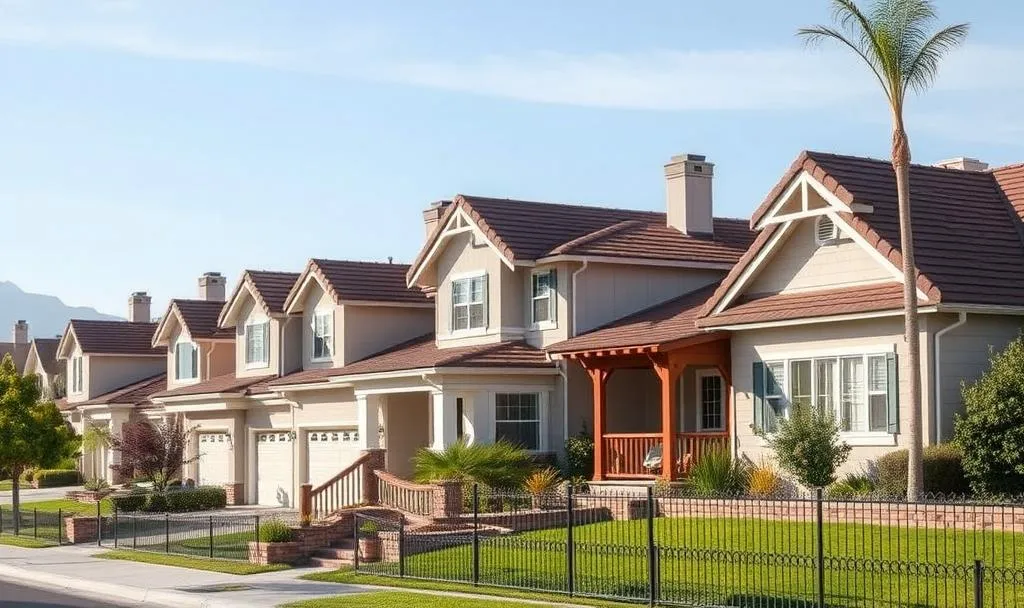
Prices here are completely different. A house that might cost a few hundred thousand euros in Germany could easily go for $2–3 million in my part of California. And we’re not even talking luxury homes—just nice, livable family homes.
Then there’s the interest rate situation. When I last checked, rates were around 7%. That’s more than triple what we paid in Germany.
People often say, “Real estate is always a good investment!” But here’s the thing—the numbers have to make sense.
If we bought a house here, our monthly mortgage would be somewhere around $10,000 or more. But if we rented that house out, we’d only be able to get maybe $4,000 to $5,000 in rent per month.
That doesn’t even come close to covering the mortgage, let alone property taxes, repairs, and management costs.
There are other differences too.
In Germany, depending on your financial setup, you could get a mortgage with a very small down payment. You still had to pay the side costs—like notary and legal fees—but your actual loan could cover most of the purchase price.
If you’re curious about navigating mortgages in Germany, I’ve written a detailed blog post with tips and a step-by-step guide that might help.
In the U.S., at least where I live, you’re expected to put down 20–30% to get decent terms on a mortgage. That’s a huge upfront cost.
And don’t forget taxes:
In Germany, if you hold an investment property for more than 10 years, you don’t pay capital gains tax when you sell. Amazing, right?
But in the U.S., even if your property appreciates significantly, you still have to pay capital gains tax when you sell—unless you live in the house for at least 2 out of the last 5 years or meet certain conditions. So even the “long game” isn’t as sweet here.
Despite all this, people do still buy property here in California. And I get it.
Some people just want their own home. They don’t want to deal with landlords or the risk of being asked to move out. Owning gives them a sense of security and freedom—you can renovate, paint the walls, and truly make it your own.
There’s also the emotional side. If your family lives here, if your kids are settled in school, if this is your hometown—it makes sense to put down roots, even if the math doesn’t work out perfectly on paper.
For me, coming from the German system with its low rates, low down payments, and tax benefits—it’s been a big adjustment.
I’m not saying I’ll never invest in U.S. real estate. Maybe someday. But right now, I’m incredibly thankful for the properties we still own in Germany. They’ve been low-stress, reliable, and honestly? Kind of amazing.
If you’ve invested in real estate abroad—or you’ve been shocked by housing prices in the U.S.—I’d love to hear your story. Just hit reply or leave a comment!
-Sindy
P.S. If you enjoyed this post, why not subscribe so you won’t miss the next one? I write like I talk – real, personal, and honest. Just me, sharing life across cultures. 💌